














On many college campuses, athletics are more than games: they are culture-makers. A team’s journey can bring together students who live and breathe the sport with those who have never even watched a basketball game.
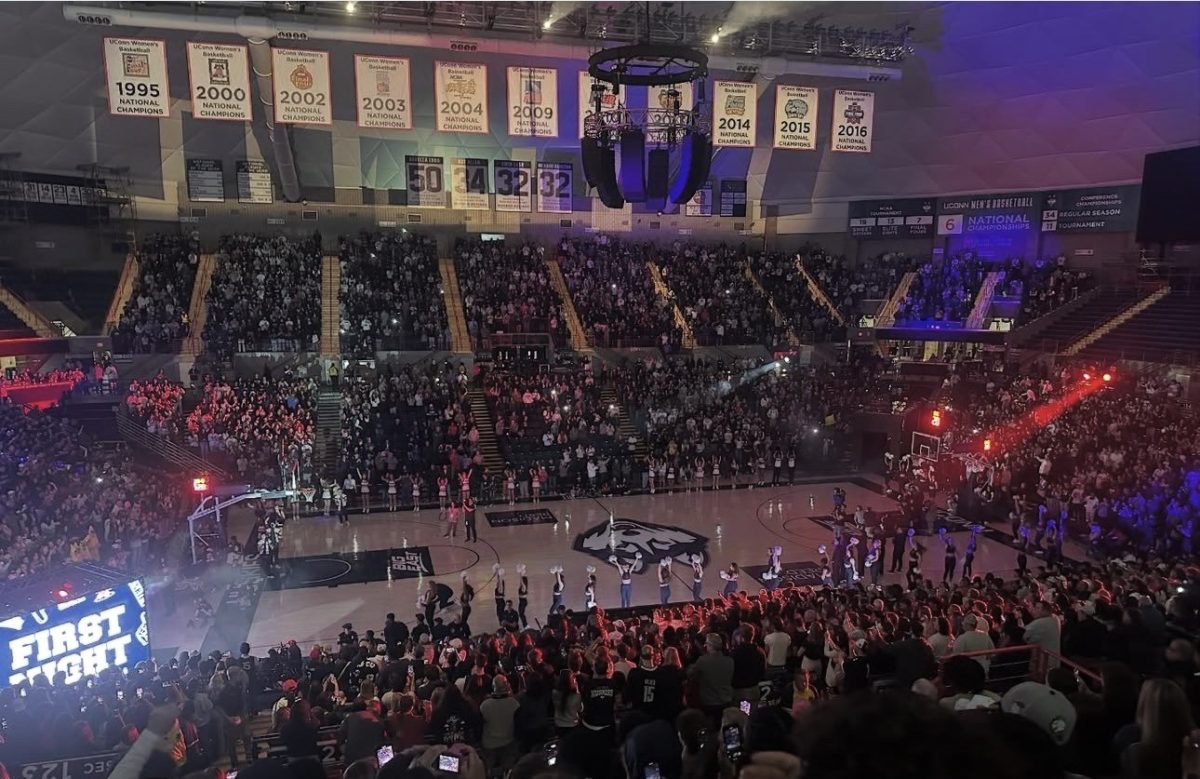
At the University of Connecticut, that was evident this March, as the UConn Huskies men’s basketball team advanced through NCAA March Madness, leaving a mark on campus life.
The culture shifted.
I visited Storrs, Conn, during the Huskies’ last two games, staying with my friend Lukas Nordell, a sophomore engineering student. Even as an outsider with no prior connection to the school, it was impossible not to feel the energy. Lampposts and banners draped the streets in blue and white, dorms echoed with chants, and clusters of students crowded into lounges and the student union to watch and discuss every play.
“It’s bizarre,” said Nordell. “I don’t usually follow basketball. But everyone here, they’re all in. My friends could barely talk about anything else for a week. So I started watching. There’s this feeling on campus, like we’re all part of something bigger. It’s not even about the game anymore; it’s just the vibe.”
From the Elite Eight thriller — capped by freshman Braylon Mullins’ late-game shot against Duke — to the 69-63 loss to Michigan in the national championship game in Indianapolis, the Huskies’ run drew in diehard fans and students who normally don’t follow sports.
In Storrs, March Madness became more than a schedule of games: It became a lived experience.
Across the student union, sidewalks and dorm lounges, conversation topics shifted: research projects and class workloads shared space with debates about foul calls and clutch shots.
For fans, UConn’s run was a source of pride. Jack Broule, a sophomore and member of the track team, said the Huskies’ performance this year reaffirmed the school’s identity.
“Every year I’m here I wear my blue and white with pride,” Broule said. “But this run, it’s like you could feel the hype everywhere. People who never cared about college hoops were watching. It was like the whole school was defending the colors.”
UConn’s defense-first style, gritty comebacks and relentless pace reflected an ethos that resonated with students balancing labs, recitals, exams and jobs, Broule said. That ethos helped transform the tournament from sport into a shared saga of courage and community.
On a broader level, UConn’s performance underscores its standing as a national power: a No. 2 seed in the tournament, a collection of stars such as Alex Karaban and Tarris Reed Jr. earning honors, and a future bright despite senior departures. But its cultural impact on Storrs may be this year’s most lasting legacy.
“Yeah, sure, we lost the last game,” Broule said. “But look around, people talk about that we made it to the final. That’s special.”
Nordell nodded in agreement. “I won’t claim I know all the stats,” he said. “But I know that showing up as a Husky mattered a lot more this March. It was awesome.”
Beyond wins and losses, the Huskies’ run this March showed how athletics can shape a campus, forging a culture of pride, unity, and shared experience that extends far beyond the court.