






What consistently changes the meaning of the word “nerd” is the group’s confidence. But how can someone who relentlessly reseaches their interests, keeps up to date with coverage in the media, and can critically analyze and appreciate this content lack confidence?
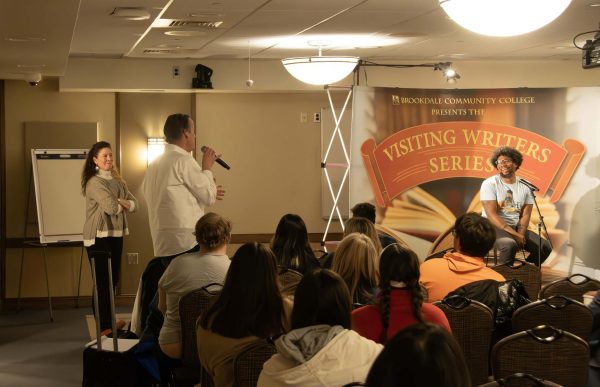
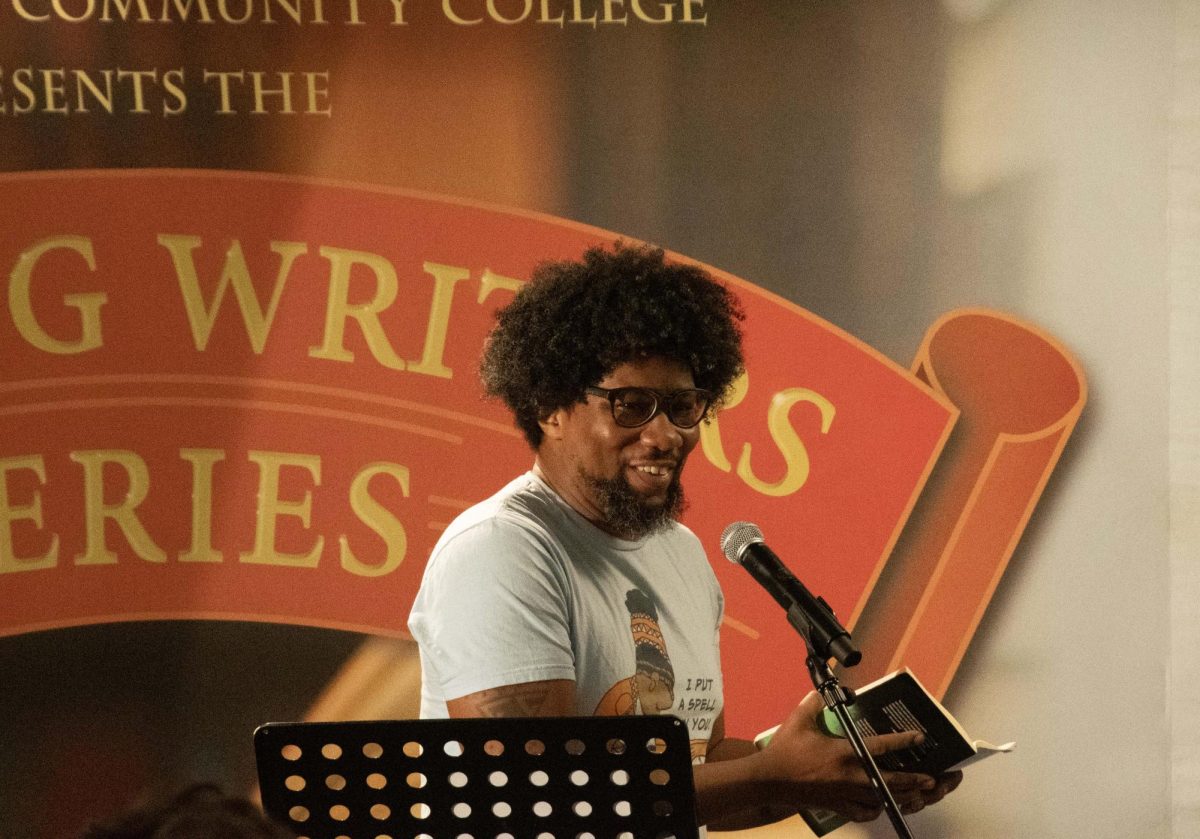
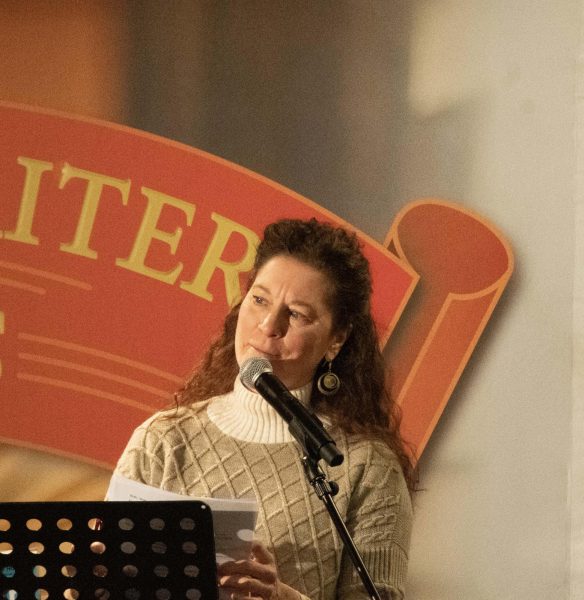
On Feb. 25, Brookdale was visited by a distinguished writer, cultural critic and digital architect, Rutgers’ own Omar Holmon, as part of the Dr. Carl Calendar Visiting Writers Series organized by Professor Suzanne Parker.
Looking past his warmth and kindness, hilarity and loud personality, Holmon exhibited traits during the dinner before the event that should not go unnoticed.
Firstly, his knowledge shined throughout. Whether talking about Marvel comics, his favorite story arcs in anime, and his love of prose in WWE, he talked extensively about his gravitation toward this digital media and clearly spent time understanding what he loved most.
As delicious as the dinner food was, the most profound morsels were the words Holmon shared with everyone in attendance. This is not to say he was a braggart in the least sense – he spoke in a manner that suggested his confidence in both what he does and does not know, a quiet nod toward his humble nature.
His intelligence also persisted through his emotional awareness, as much of his subject matter deals with past trauma, viewed through a comedic and heartwarming lens. He explained how his own past traumas would inform his writing process, but how humor makes memories easier for not only him, but also for his readers. This theme of grief being masked by comedy recurred throughout the dinner, as was partly his introduction to writing poetry.
Holmon maintains that his love for poetry started with his first-time encountering poet Tony Jackson, a Rutgers-based slam poetry speaker. According to Holmon, watching Jackson for the first time led to a personal epiphany: What Jackson did was what he wanted to do with the rest of his life.
This knowledge neatly leads to another big takeaway – Holmon’s passion. No matter the subject, he spoke with the intensity that suggested how much he enjoyed his past experiences and the content he explores.
His most recent book, “Black Nerd Problems,” shares a title with the website Holmon co-founded with William Evans back in 2014. The website’s goal is focused on bringing voices to inform passionate people, and is home to a plethora of interesting articles, news stories, and media reviews. The platform has garnered a strong following and a revered reputation for amplifying a variety of voices.
Perhaps the most interesting moment to encapsulate Holmon’s passion is when he mentioned how the words “nerd” and “fan” are interchangeable in today’s day and age. He continues this notion in his discussion of “Black Nerd Problems,” a collection of essays with Evans that won the 2025 Hugo Award for best Fanzine.
Holmon said he aims to make the essays enjoyable reads for his fans, rather than traditional and academic in format. He said this helps to make him feel less “stuck” with a certain style and allows the reader to build a more profound connection to his words.
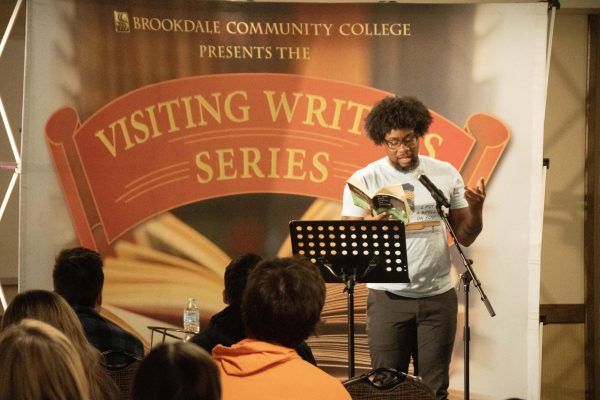
Holmon said all his poems are made to be performed, creating quite an enjoyable atmosphere during the event itself.
Holmon does not shy away from swearing in his reading yet he makes a point to drop curses in tastefully – in a natural manner that upholds his flow.
His delivery is precise and directed; his inflections in volume make his performance exponentially more dramatic and gripping. He tackles timely subject matter, like his relationship with mental health, as well as reminiscent stories about his family, most notably a stellar piece about his mother’s affection toward John Denver.
His delivery is calm, aggressive and passionate; all rolled into one, picking his spots at all the correct times. His unique charm and change in tone made for an incredible lesson – Omar Holmon is a force.
Holmon was gracious enough to sit down for an interview. Here’s what he had to say.
Q: So, you started out competing in poetry slams, which is how you met William Evans. What was your introduction to writing poetry? What moved you to go on stage and perform? Can you talk about the process of writing poems?
A: I mean, I was a young kid writing little poems and everything like that. But what really did it — there was this dude named Tony Jackson, who also went by Zach Ross. He came to my school with Verbal Mayhem, a group he helped found. And he said this line: “I’m coming back from tomorrow to see how far you come today.”
From there on, I was like, okay. I want to do this for the rest of my life.
My high school teacher, Mr. Ryan, helped me with poetry — structure, form, all that. Later I found out he was kind of figuring it out himself, but that didn’t matter. He helped.
When I’m writing, I think about range. I grew up with humor, so I’m always asking: How can I make this funny? And is there going to be a turn?
Sometimes it’ll start funny, then get serious — and stay serious. But I like the roller coaster. Funny. Serious. Maybe funny again. Then serious again. I don’t want the reader to know what’s coming next. Life isn’t one note. There can be humor and grief in the same breath. That range — that’s the fun part.
Q: In reading your first book, “We Were All Someone Else Yesterday,” great title btw, it was clear that you found such a relatable voice. You share some stories that seem deeply personal – what comes to mind is you describing racing your father which is something I remember vividly doing as well. As a writer, do you have reservations sharing something that personal? Do you generally hesitate, or do you find it easier to write about something personal?
A: That’s a good question. It goes back to range again. How far are we going?
The most personal thing I can think of — my mom passed, and I wrote about how my dad asked me to stay with him. Our relationship wasn’t great at the time. And if I’m being honest, I had this thought — I didn’t want it to slip out in real life — but the thought was: It should’ve been you and not her.
I don’t feel that anymore. But that’s how I felt then.
So the question becomes: Do I put that in the book?
It’s honest. It’s human. It’s not pretty. But if I only put the pretty things in there, then I’m not telling the full truth. We need the ugly. The complicated. The things exactly as they are.
It’s like building a puzzle. Does this piece belong? If it does — even if it scares you — it probably goes in.
And also… my dad’s probably not going to read it anyway. (laughs)
Q: You had two publication processes for both books you’ve published. For “We Were All Someone Else Yesterday,” it was Button Poetry, and for “Black Nerd Problems” it was Simon & Schuster. What was the publication process like for each? How did they differ, if at all, and did you find that they facilitated your creative processes?
A: With Button Poetry, there was more freedom. It was like, okay — this is your poetry thing. The editing was about clarity of image, tightening language. Very craft-focused.
With Simon & Schuster? That’s a machine.
There’s legal. Like, “Is there a legal basis for this joke?” You’re meeting with departments. You’re thinking about how the book is going to be sold. Who’s the audience? How do we get this into the right hands?
I’m not going to over-explain things for white readers. But we do want clarity. And there’s just more elements to consider with a major publisher. It can be tiring. But you gotta do it.
Q: So, your book “Black Nerd Problems” had a preexisting fanbase, from the online platform with the same name. On the about section the site is described as an “editorial and informative website that focused on popular, nerd and geek culture from the perspective of People of Color.” In the book you describe the harmful nature of gatekeeping in nerd culture. Is this a way to bring together people to prevent gatekeeping from occurring, informing people on media in the space and give opportunities for people to talk about what they love? What was the initial vision of the site and has anything changed as it’s gained popularity?
A: It’d be wild if I said no. (laughs)
Yeah. The vision was: We can look at pop culture through a Black lens. But that doesn’t mean we’re only looking at Black things. We contain multitudes.
And Will and I knew we couldn’t cover everything. I’m not queer. I’m not a woman. There are things I’m going to miss. So we made sure to have writers who could speak to those experiences.
It made the site better. It made it fuller. And it meant we didn’t have to pretend to know everything.
Q: So, I followed you on Instagram around a week ago, and I was ashamed that I hadn’t sooner because of how fun your page is. Could you speak on the importance of your online presence, and what would you say to people who would maybe like to create similar content but are held back by insecurity of going online?
A: When publishers first suggested TikTok, I was like — I’m too old for this. I don’t want to see an old dude on TikTok. (laughs)
But friends encouraged me. They said the platform needs informed voices.
The hardest part is finding your voice. Once I realized I could structure videos like essays — thesis, jokes, conclusion — it clicked.
I tell my students: What spreads faster — negativity or honesty? Negativity.
But what lasts longer? Authenticity.
People get tired of negativity. If you move with integrity, people trust you. And when you mess up — because you will — they’ll be more forgiving.
Q: Your book doesn’t shy away from criticism of the United States government, although it isn’t the focus. The country is currently undergoing as tumultuous a time as any right now, and people are afraid to share their voice without jeopardizing their safety. What would you feel is the best way to make your voice heard, particularly about national injustices, in today’s day and age?
A: You have to assess your safety. That’s real.
If you have privilege, use it. I know there are things I can say that others might get attacked for more harshly. So I’ll step in where I can.
And resistance doesn’t look just one way. It can be speaking. Donating. Showing up. Amplifying. Being present.
There’s always something you can do. Find what works for you — and keeps you safe.
Q: It would be a huge miss if I didn’t talk about anime at all. You obviously have a huge connection to the medium, another thing I really related to. What was your introduction to anime? What makes you connect with this kind of art so much? And just for fun, why not give us a top 5 of your favorite characters?
A: I love hand-to-hand combat. The intricacies of it. In animation, you can really break that down. Sure, summon a giant monster — cool. But what can you do with your fists?
Story-wise, One Piece might have the best world-building in any medium. It’s a modern epic.
Top five? Off the top of my head:
- One Piece
- Hajime no Ippo
- Haikyuu!!
- Naruto
- Demon Slayer
And I love Attack on Titan too — even when it lost me a couple times. (laughs)