




















While immigration enforcement often plays out through federal policy and political debate, its effects are felt most clearly in individual lives and families. For those with immigrant roots or relatives, neighbors and friends who may be vulnerable to scrutiny, the issue becomes more than a headline—it becomes a personal concern.
The impacts of Immigration and Customs Enforcement activities taking place both locally and across the country are being felt at Brookdale in a variety of ways.
“To be honest, it’s been rough,” said one Brookdale student. “I have a few uncles who got caught by ICE, and a family friend’s father was detained, too. Seeing that happen to people close to you is painful.”
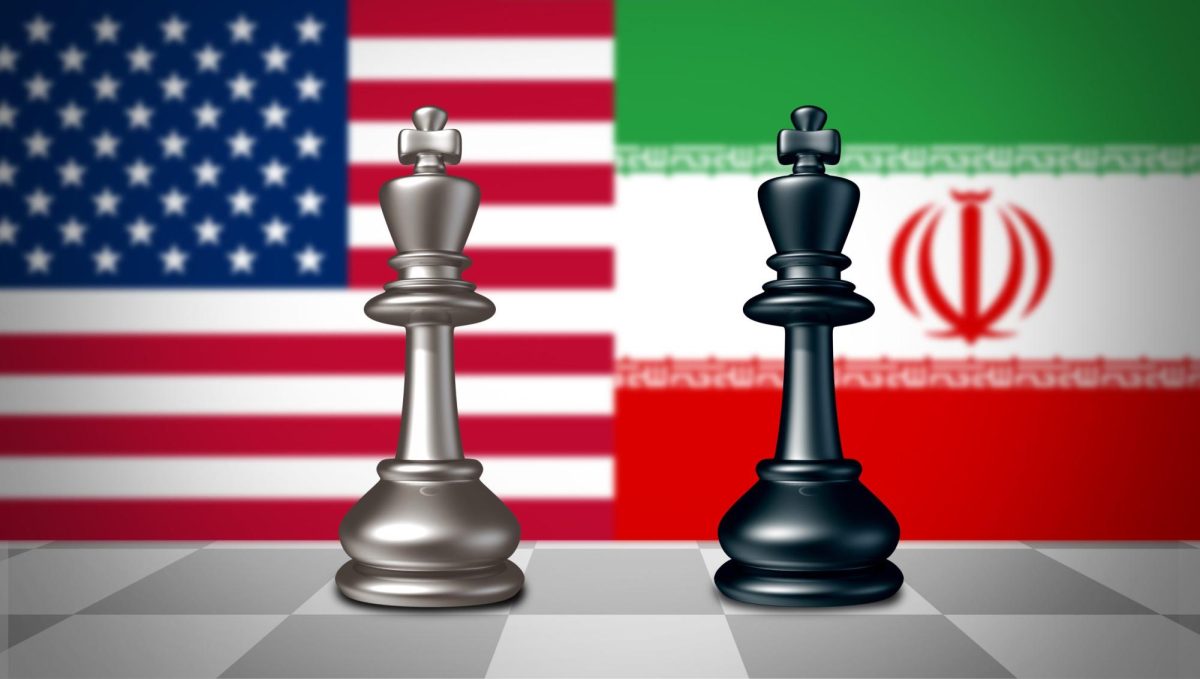
As the United States continues to grapple with immigration policy, the same questions that have surfaced throughout history remain: Who is welcomed, who is excluded, and how should the nation balance enforcement with the ideals it claims to represent.
“Systemically, these are not new issues. A government that overly exercises its executive power against public interest, creates conflicts that the American people don’t want, while policing us violently at home, it is a very concerning trend,” said an anonymous 32-year-old Brookdale staff member.
“I think at the end of the day people don’t want to see masked men snatching people up off the streets that have no accountability, regardless of if you think immigration enforcement should even happen. No matter what your stance on it is, I don’t think people want to see masked federal agents. It’s just the wrong thing to see in the land of the free.”
A student from Red Bank said immigration enforcement has impacted his family’s small business where many customers are Hispanic.
“Business has definitely slowed down,” the student said. “Nobody wants to spend money on something they don’t really need right now.”
Some students interviewed also said they support the ICE operation. One student said immigration enforcement is necessary for public safety.
“ICE is important for keeping the country safe,” the student said. “The agents are just doing their job.”
Other students, however, criticized the way some enforcement actions have been carried out.
“It’s terrible,” another student said. “Separating families and taking kids away from their parents — as a society, that’s not right.”
“Because of social media I think we’re seeing these problems like never before,” the 32-year-old staffer said. “It has affected my social media feed. Social media and the news itself seem like it’s being pushed to create friction points, to divide us on our views. We’ve done mass deportations in the past, and it never received this much press. I think that says a lot.”
“There is a history of mass deportation in this country, especially if you think about something like after World War II when we were deporting millions of Mexicans that came here to do jobs during the war. It’s different this time because it’s being pushed to us. People are seeing it,” he said
Several students also said they have noticed the issue discussed frequently on social media, even if it has not directly affected their daily lives.
Historically, World War II created a powerful contradiction within Americans attitudes about immigration. As millions of American men left the workforce to fight overseas, the United States faced severe labor shortages, particularly in agriculture and railroad work. To address this, the government established agreements with Mexico that allowed Mexican laborers to enter the country temporarily and fill essential jobs. These workers became crucial to sustaining wartime production and the agricultural economy. Their presence illustrated a pragmatic side of U.S. immigration policy: when labor was urgently needed, the nation opened its doors and relied heavily on immigrant workers.
However, once the war ended, the political climate shifted again. Economic competition and renewed nativist sentiment led to growing hostility toward Mexican migrants, including many who had previously been encouraged to work in the United States. In the 1950s, the federal government launched Operation Wetback, a large-scale campaign aimed at removing undocumented Mexican immigrants from the country. Hundreds of thousands of people were deported, often in harsh conditions, reflecting the same cyclical pattern in which immigrants are welcomed during times of economic need and expelled when they are perceived as a threat.
The United States’ history of deporting immigrants stretches back even further, to the Alien Friends Act of 1798. The law gave the president discretionary power to deport any foreigner he deemed “dangerous to the peace and safety of the United States.”
In today’s world, these issues and conflicts are being broadcast on a daily basis. While the news frequently highlights immigration battles across the country in places like Minneapolis, Portland, Chicago, and others, it can be easy to view these debates as distant problems. However, for some residents, the concerns surrounding immigration enforcement feel much closer to home.
“My in-laws are Spanish, and they live in a state where the current immigration policies are very supported. They’re down in Florida, so I worry that they’re going to say something to the wrong person and get taken away for a little bit or something like that. So that’s really the most pressing thing that concerns me personally,” the staffer share, noting that his in-laws are American citizens.
“That’s the thing. They immigrated here. My fiancé’s grandmother was a store owner up in North Jersey. So, you know, she did the whole American dream. She immigrated, became a business owner, made a living, and then moved down to Florida. But she does not speak English very well and I could see her being harassed over it. I’ve seen online how just if someone fits a profile for an ICE target, agents have no problem harassing, even arresting them, American citizen or not.”
For many Americans, immigration debates remain largely political conversations happening at the national level. But for others, the issue intersects with family histories, community identities, and personal concerns about how immigration enforcement is carried out. As immigration policies continue to evolve, discussions about enforcement, civil liberties, and the country’s long history of migration are likely to remain a central part of the national conversation.